


A Biologist’s Kickstarter Post-Mortem
Better late than never! Here are my take-aways almost 2 years post-successful Kickstarter project:
The hardest part, the steepest learning curve, the trickiest wicket… for me at least, was definitely the marketing and social media campaigning. Here’s what I found:
- I spent a lot of time emailing people personally and that worked ok – in that email I included links and draft messages they could either copy and paste into Facebook or personalize themselves. Make the call to action clear (1- support and 2- share) and make it super easy for them to share but also to edit/ make the message their own.
- Asking people to share the link on their twitter DOES NOT work – it’s like whispering in crowded room.
- However, asking thought-leaders with big twitter following in the interest area you’re targeting to tweet about your campaign works super well.
- If you have fun graphics that would do well on Tumblr and Pinterest – again ask people with big followings in your interest area to post them on your behalf (unless you have a big following there, too) – this works well, too.
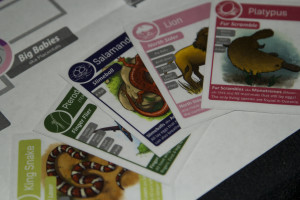
A photo of my game prototype that did aiight on Tumblr – I submitted it along with a small pitch of the Kickstarter project to science-interest Tumblrs
- The middle part of your campaign is the worst – traffic picks up at the beginning and again at the end.
- I went to / hosted a few events that were games or education themed and they didn’t drive much traffic… I think because my “call to action” was too removed (I was handing out cards so people could support later and getting email addresses to follow up later). If you do decide to go to or to host events, bring iPads and/or computers where you can get people to support on the spot. Use an incognito browser so people’s logins aren’t remembered.
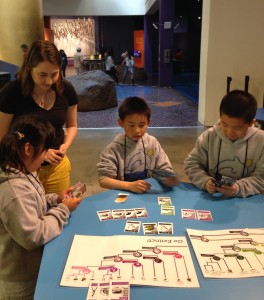
These events are so fun, though! Genetics Day at the Tech Museum in San Jose
Finally, If you haven’t already, be sure to back a few projects on Kickstarter! For research reasons of course but also: people kind of judge creators who expect support for their project but haven’t supported anybody else; Kickstarter is tight-knit for an online community in this regard. I am delighted to say that a number of my colleagues in the science communication space (e.g. Stated Clearly, Grandmother Fish, and Beatrice the Biologist) I met through the Kickstarter campaigning phase.
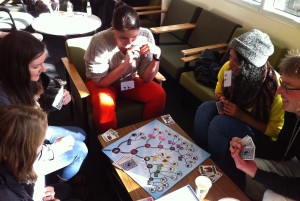
Just remember all the stress, sweat, and heartache are worth it!
Manufacturing
Ordering from a manufacturer as a company != ordering from a store like a consumer
Communicating what you want from a manufacturing company is hard and freight takes a whole lot longer than you might expect (I was 3 months late on delivering the rewards because I wasn’t told until after the campaign finished that it takes 90 days for a boat to bring games from China to the US).
Other than that, I had a good experience with AdMagic, which where Cards Against Humanity went with. For 1K games it was around 9K all services included. But price totally depends on your game’s components – for us having a quad-fold board really brought the price up. If you just have cards it will be less.
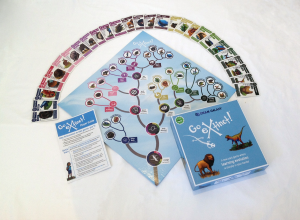
Go Extinct! in all its manufacturer-quality glory
All of the places you can consider have a way for you to generate a quote relatively quickly when you know what’s going into your game. (Note: a lot of these online forms seem to assume you’re an expert in color printing technology… it is totally okay if you leave fields blank, reps still get back to you and explain the important stuff).
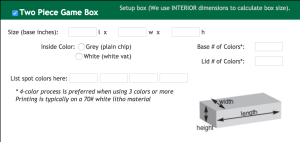
Spot what, now?
AdMagic may be slightly more expensive than other firms but they really do handle everything for you – particularly the difficult communication around artwork and freight logistics (working with the printer in China, customs, freight shipping, etc). For my second manufacturing run I attempted to do more of that myself and work directly with a Chinese manufacturing company and it was a nightmare that ended up costing about the same. So I’d say go with a place like AdMagic for your first time unless you have experience communicating with Chinese firms.
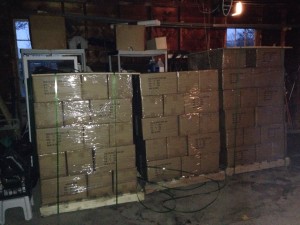
This is how 1000 games fit into a 2-car garage.
Shipping
I didn’t realize how much e-commerce sites subsidize shipping – it costs more than you think!
The first manufacturing run I did everything myself – had the games and all the backer rewards shipped to my place and I bought a Stamps.com account (super great deal and if you listen to podcasts they always run ads with keywords to kick in more discounts), a special thermal printer for shipping labels, and a big ol’ packing tape dispenser.
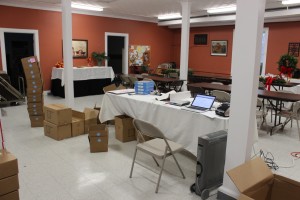
A benefit of having a pastor for a mom? Access to a big room!
I think this is pretty feasible for campaigns with 500 or less backers if you have access to the storage required (like a garage). Remember that USPS gives you free priority mail boxes which are usually a good choice (Stamps.com will help you determine this).
Think about the dimensions of those boxes as you design your game… Oh and be sure to call ahead to your local Post Office that you’ll be coming in one day with a literal crap tonne of boxes to send so they can prepare.
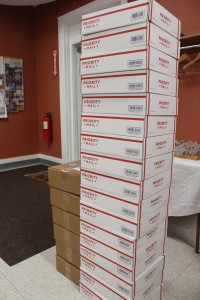
A small fraction of the Backer delivery throughput
Overall, I liked how doing this DIY allowed me to add a personal touch to each box – I wrote each backer a personal thank you note on a Go Extinct! postcard (which was super time-consuming but felt like the right thing to do, especially since it’s a lot of people you know supporting you).
If I could do one thing over again, it would be to use a service like BackerKit to help manage reward fulfillment. I didn’t because, as a backer, I didn’t like the money-grubbing feel it has… but having a tool like that to help you process your orders would have been nice. Kickstarter literally just gives you excel spreadsheets and wishes you luck.
Best of luck! Post questions in the comments and I’ll update this post to address them when I get a chance.
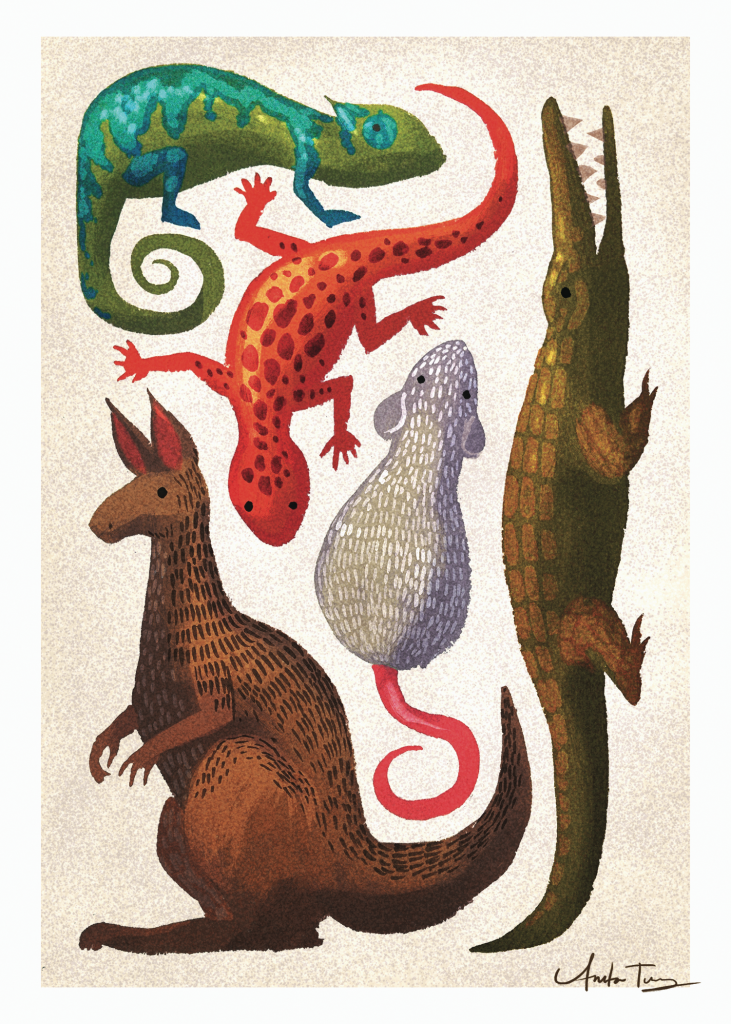
Go Extinct! Concept Art for the thank-you postcard by our fabulous Illustrator, Anita Tung