


Kids Make Brilliant Beta-Testers
Kids are the best beta-testers. Seriously. In ensuring that Go Extinct! would have a broad appeal, we engaged in hundreds of hours of playtesting with a broad range of testers. We received feedback from humans ranging from age six to eighty-four, and over this past year we’ve come away with the following observations.
Kids readily point out anything that distracts from the enjoyability of the central experience
“MAKE THE CARDS NOT SEE THROUGH.”
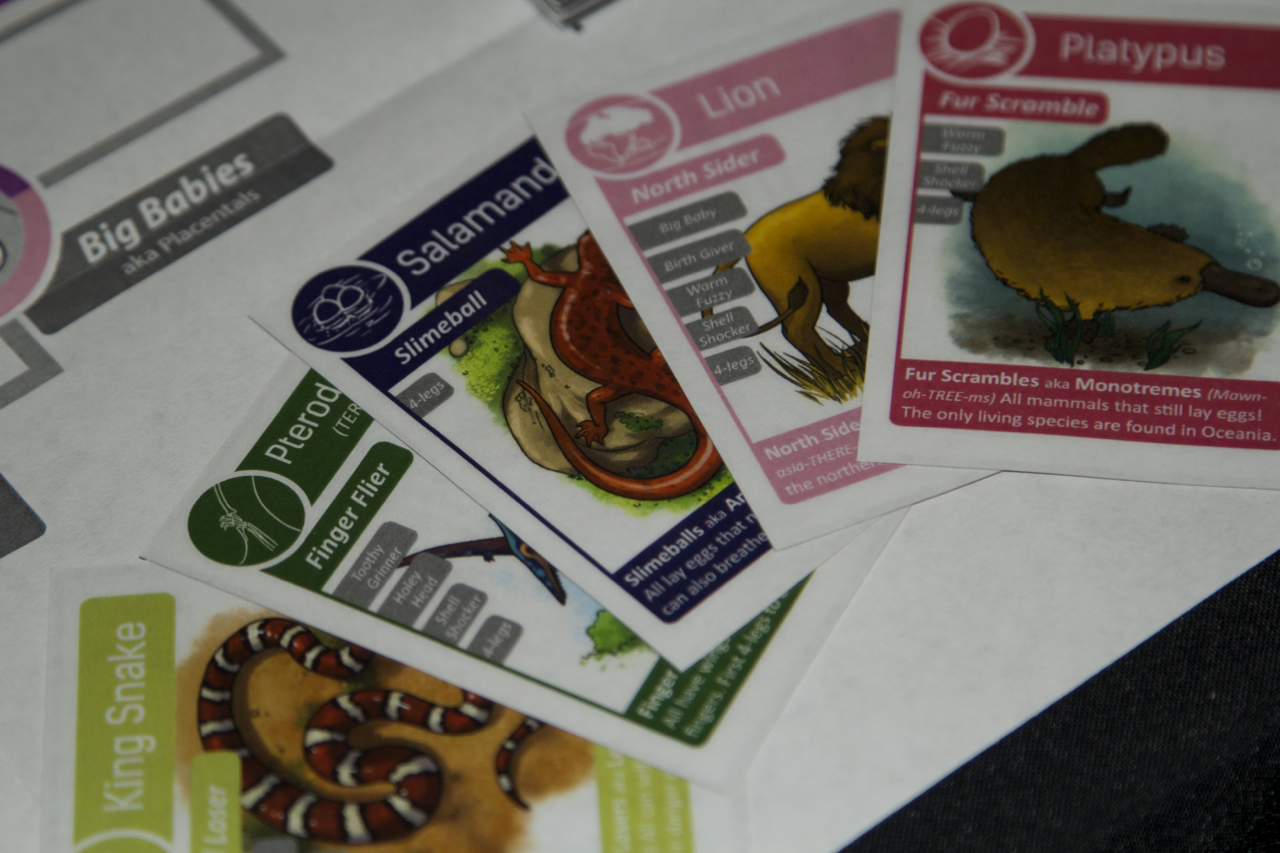
It goes without saying that cheating makes games less fun. The first Go Extinct! prototype was made with cheap, quickly printed cards and ended up being see-through. Beta-testers understood this was a work in progress, right? And all of the adults who played moved past it. After all, you could only tell what was in your neighbor’s hand if you were really looking.
When we brought this prototype to kids, however, they just kept bringing up the see-through cards. At first we dismissed it as feedback for a later prototype, but then we realized it was seriously impacting how the kids were playing. Thinking back, I was forced to admit that even grown-up playtesters admitted to cheating by looking at their opponent’s cards.
This meant we hadn’t been getting feedback on the game we had intended to design! You know, the game where you had to listen and cleverly infer what your opponents might have in their hands. After investing a couple of bucks more per playtesting kit for an opaque back, the gameplay feedback I received (from adults and kids alike) improved.
Working with kids requires simplicity and clarity…something we all should aspire to
“YOU CAN EXPLAIN BETTER HOW YOU WIN OR LOSE.”
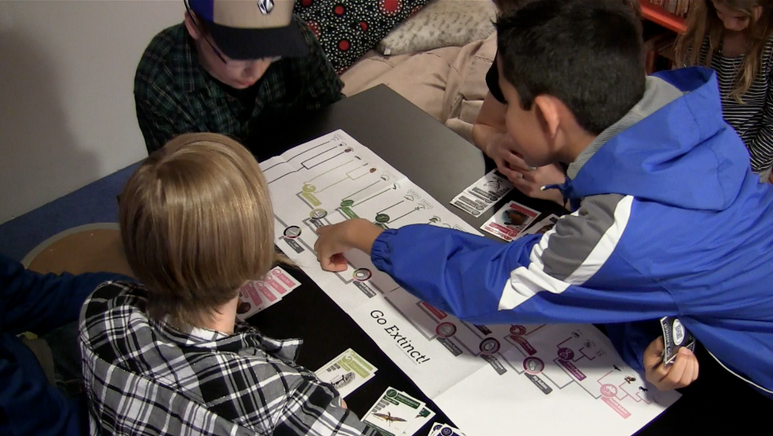
Anyone who has taken on the labor of designing a game can appreciate the challenges of rule-making. In an attempt to make sure one’s players have a perfect playing experience, time and time again, it’s tempting to write rules for every situation that the game might create.
Playing with kids, however, revealed which rules did and didn’t make sense in the wild. Especially rules that enforced behavior that didn’t line up with human tendencies.
For example, one of the rules is you can’t set down a completed set until it is your turn. This sounds perfectly expected, but we also allowed players to draw cards not on their turn (when another player took one of their cards). When kids drew and completed a set – they just couldn’t wait for their turn and then the game got out of control with everybody doing something at the same time.
Confusing? Yes, it was. We fixed it by getting rid of the draw-off-of-your-turn rule. With less chaos (and a few more rule tweaks here and there), winning the game became more about strategy.
Kids think outside the box because they don’t know what the box is
“THE ANIMALS SHOULD HAVE COOL NICKNAMES”
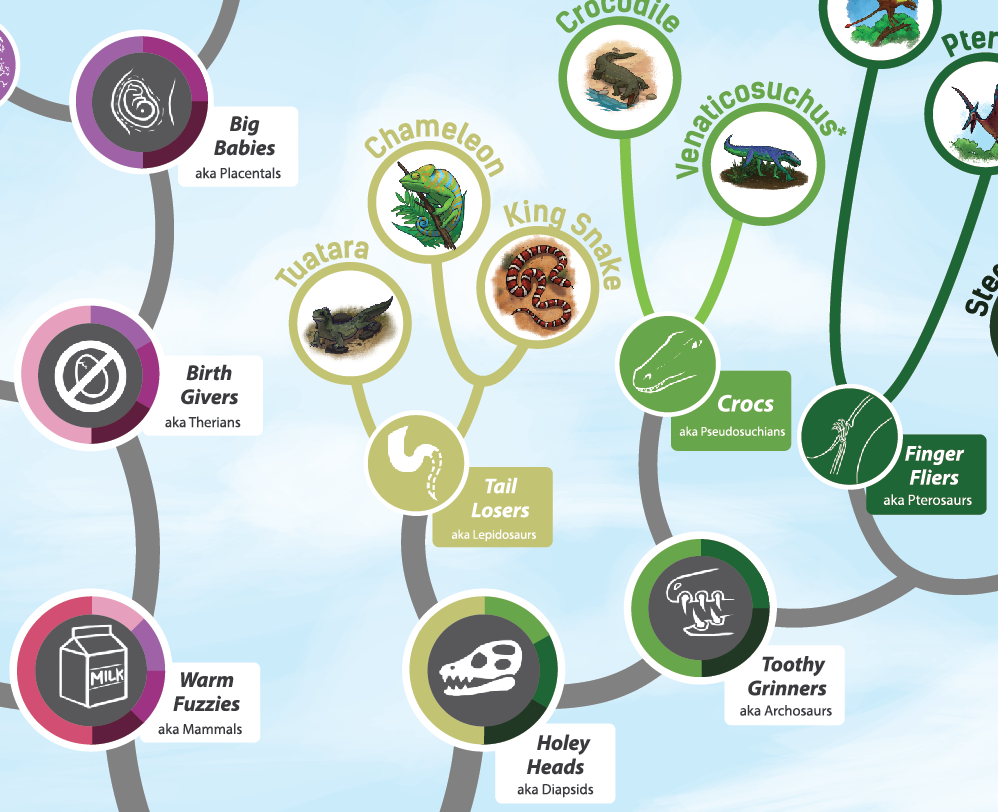
In a 7th grade science class in San Francisco, our first indicator of feedback came as we explained the rules: every time we used one of the scientific names for the animals in our game, eyes glazed over as adolescent brains overloaded.
Unsurprisingly, we got a ton of criticisms about the complicated vocabulary as a major obstacle to fun. The solution turned out to be simple and elegant. And one of our young beta-testers proffered it: “the animals should have cool nicknames.” As a scientist, I (Ariel) had defaulted to what normally goes on evolutionary trees — scientific names. The kids had no such preconceptions but they were experts in what they knew would be fun.
Even better, the nicknames we came up with further emphasized a major educational point of the game: scientists use common traits to group related animals. For instance, all Diapsids have at least two extra holes in their skull, so we nicknamed that group “Holey Heads.” Way easier to say and you’re more likely to remember what trait all those animals share. Making this change not only made the game more accessible and educational but also way more engaging.
The coolest thing about working with kids has been their high level of engagement. Their energy is infectious and my particular crowd’s ongoing investment in the success of Go Extinct! has kept us in touch as they work on designing their own expansions to the game.
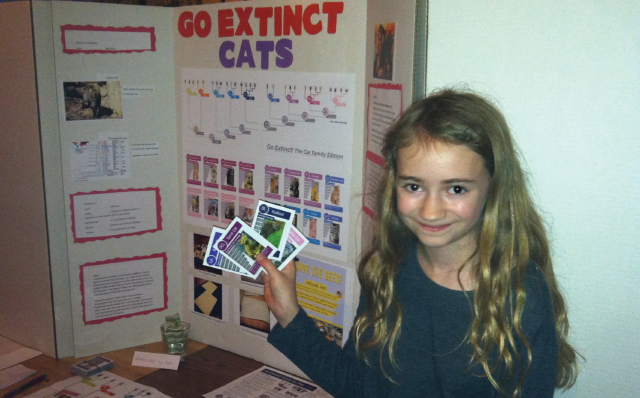
Written by Ariel Marcy and Vanessa Kerr
STEAM Galaxy Studios is a San Francisco based educational game start-up who created Go Extinct!, a Next Generation Science Standards aligned game about evolution with the help of a successfully funded Kickstarter campaign. As part of their social justice mission they are providing all science educators a free printable version of the game.
Special thanks to betatesters at KIPP San Francisco Bay Academy and the Brightworks School for your energy, enthusiasm, and priceless feedback.